







What is Modified Wood Flooring?
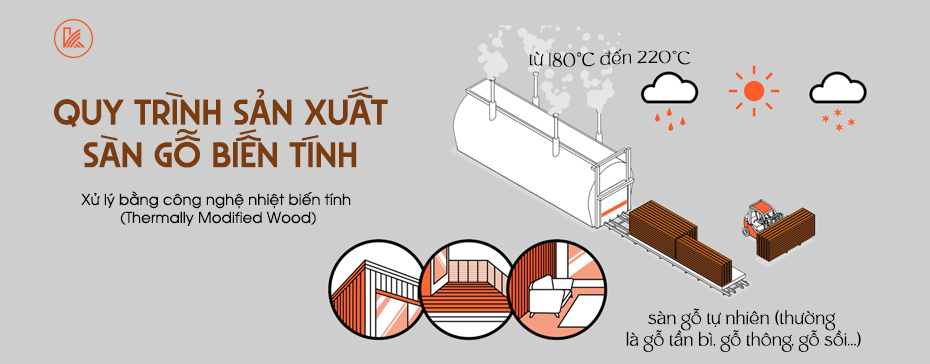
Modified wood flooring is a type of natural wood floor (usually ash, pine, oak...) treated with Thermally Modified Wood technology that undergoes high temperature treatment (from 180°C to 220°C) in an anaerobic environment (lack of oxygen) to change its physical and chemical properties to changes the structure and properties of wood, helping to improve its durability and weather resistance. The denaturation process reduces the water absorption ability of wood, making the wood more stable, less shrinking, warping and naturally resistant to termites without using toxic preservative chemicals.
Modification technology often uses high temperatures or safe chemicals to reduce the amount of water in wood and stabilize the structure. The result is a material that retains the natural beauty of wood while also possessing outstanding durability.
Modified wood flooring is gradually becoming a new trend in the construction materials and interior decoration industry. With outstanding advantages compared to natural wood floors and traditional laminate floors, modified wood floors promise to bring a luxurious, durable and environmentally friendly living space.
Modified Wood Floor Production Process
Modified wood floors are produced through a special heating process at temperatures from 160°C to 220°C, in an oxygen-free environment, helping to remove moisture and reduce the amount of sugar in the wood structure - the cause of termites. The thermal denaturation process usually includes the following main stages:
The production process for outdoor modified wood flooring is similar to indoor modified wood flooring, but there are often some adjustments to optimize for outdoor use conditions:
-
- Choose wood: Commonly used types of wood are Ash, Pine, Oak,... with clear origins, usually from sustainably grown forests.
- Pre-drying: The wood is dried to reduce the moisture content to an appropriate level before being put into the conversion furnace.
- Thermal denaturation: Wood is put into the denaturation furnace and slowly heated to the specified temperature. This process is strictly controlled to ensure the wood does not burn or crack.
- Cooling and stabilization: The wood is slowly cooled and brought to a balanced moisture content.
- Surface treatment (optional): Some types of outdoor modified wood floors can be surface treated with oil or specialized paint to enhance waterproofing and UV protection.
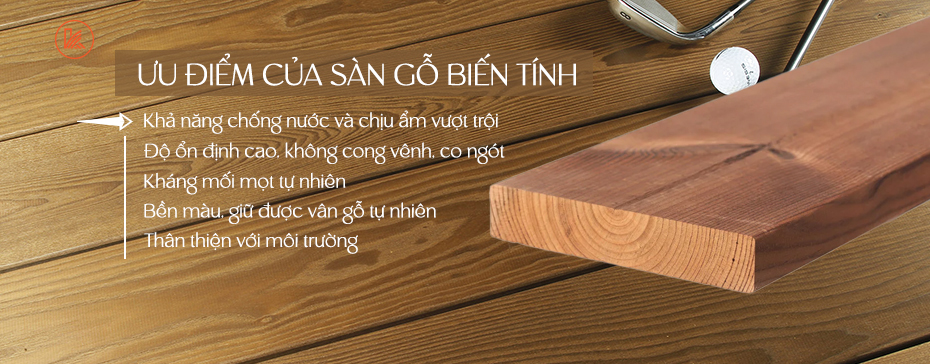
Outstanding Features of Modified Wood Floors: Thermal modification process gives wood floors superior properties that are difficult to obtain with other types of wood floors
Outstanding Durability, Absolutely Termite Resistant
- High water and moisture resistance: Thermal modification process reduces the moisture absorption ability of wood, making modified wood floors less susceptible to warping, shrinking, and swelling when exposed to water or high humidity.
- Anti-termites and mold: High temperatures destroy the cellulose structure - the main food source of termites and molds, helping modified wood floors to naturally resist these harmful agents.
- High hardness and stability: Modified wood floors have higher hardness and dimensional stability than untreated natural wood, helping the floor to last over time.
- Longevity of up to decades: No fear of termite attack, warping or damage due to weather.
High Aesthetics, Luxury and Class
- Natural color, beautiful wood grain: Thermal denaturation process creates natural, warm and uniform color for wood. The wood grain remains intact, bringing a luxurious and sophisticated beauty.
- Diversity in types and colors: Modified wood floors can be produced from many different types of wood, each type of wood will have its own color and grain, meeting the diverse needs of customers.
Safe for Health and Environmentally Friendly
- No use of toxic chemicals: The heat denaturation process uses absolutely no chemicals, ensuring safety for users' health and environmental friendliness.
- Reduce exploitation of natural forest wood: Modified wood flooring can use planted forest wood, contributing to the protection of natural forests.
Comparison of Modified Wood Floors with Other Types of Wood Floors
To better understand the advantages of modified wood floors, let's compare them with two other popular types of wood floors: natural wood floors and engineered wood floors.
| Criterion | Outdoor Modified Wood Flooring | Outdoor Natural Wood Flooring (untreated) | Outdoor Wood Flooring (WPC) |
|---|---|---|---|
| Durability | Very high, water resistant, termite resistant, good heat resistance. | Low, susceptible to termites, warping, and rotting. | High, good water resistance, but can fade and become brittle in sunlight. |
| Aesthetics | Natural color, beautiful and uniform wood grain. | The colors and wood grains are diverse and unique. | The designs are diverse, but usually do not vary in natural wood grain |
| Price | Higher than wood-imitation plastic floors, equivalent or lower than high-quality natural wood floors. | High, depending on wood type and quality. | Average in its categories. |
| Safety | Safe for health, no chemicals. | Safe if no toxic preservative chemicals are used. | May contain additives, need to choose products with safety certification. |
| Environment | Friendly, using planted forest wood. | Environmentally friendly | Environmentally friendly |
| Maintenance | Easy, inexpensive. | Difficult and expensive. | Easy. |
To recognize modified wood floors, you can rely on the following characteristics:
- Color: Modified wood floors are often darker brown than untreated natural wood. The color is uniform across the entire wooden bar.
- Smell: Modified wood floors have a light aroma typical of burnt wood, different from the pungent smell of natural wood or the chemical smell of laminate floors.
- Hardness: Modified wood floors are usually harder than untreated natural wood.
- Certification documents: Require suppliers to provide quality certification documents, proving origin and production process.
When should you choose modified wood flooring?
- High-end interior applications: Living rooms, bedrooms or kitchens need luxury and durability.
- Exterior applications: Gardens, balconies, porches or outdoor spaces that require good water and weather resistance.
Outdoor modified wood floors are widely used in many projects such as:
- Garden and balcony flooring.
- Paving outdoor walkways and swimming pools.
- Construction of resort areas.
- Decorate the exterior space of villas and townhouses.
With good resistance and high aesthetics, outdoor modified wood floors are the top choice for projects that require luxury and durability.
Modified wood floors are the ideal solution for those who love natural beauty but need high durability and good resistance. Let Wood Floor Warehouse accompany you in choosing and constructing wooden floors, helping you own a perfect, durable living space over time.
WOOD FLOOR WAREHOUSES is not only a product supplier, but also a trusted partner, accompanying you in creating the ideal living space. Beautify Your Home With Wood Floor Warehouse