












Natural wood floors are used from hard woods, have good strength, resist friction, abrasion, etc. In the past, to make wooden floors, people often had to use precious woods such as rosewood, rosewood, rosewood, etc. And to own natural wood floors for your beloved home is a very luxurious thing, because the floor products have a very high price due to the use of precious materials with outdated processing techniques that are mainly handmade to produce products that are not available. high aesthetics. Today, with advanced techniques combined with modern machinery in the wood processing industry, natural wood floors have been created from many different types of wood, natural wood floor products are more diverse, richer, and products are closer to consumers.
Natural wood floors is the top choice in high-end interior projects in Vietnam thanks to the sustainability, aesthetics and value it brings. Originating from 100% solid wood, natural wood flooring is not only beautiful but also has outstanding characteristics of durability, load-bearing capacity and environmental friendliness. To help customers have a detailed view, below is an overview of the natural wood floor production process, classification according to hardness of natural wood, and the benefits of using it.
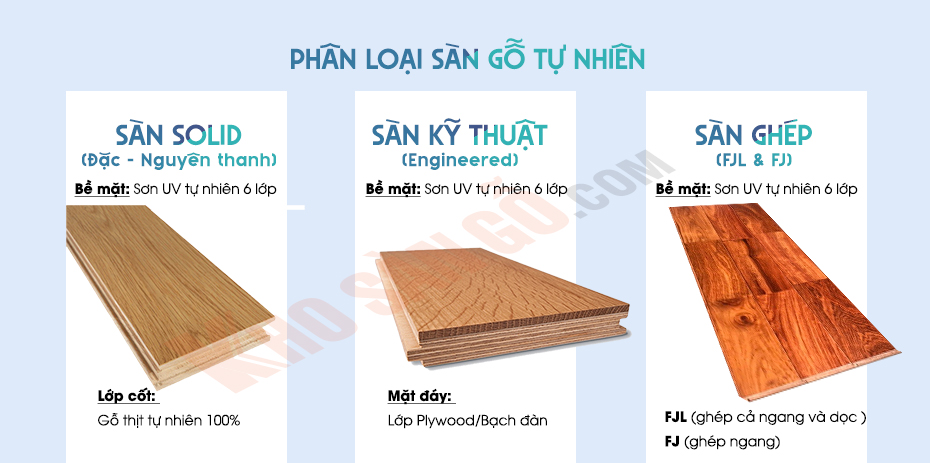
- Common types of solid natural wood floors such as: Chiu Liu, Cam Xe, Giang Huong, Oak, Walnut, Teak, Red Wood, Sen
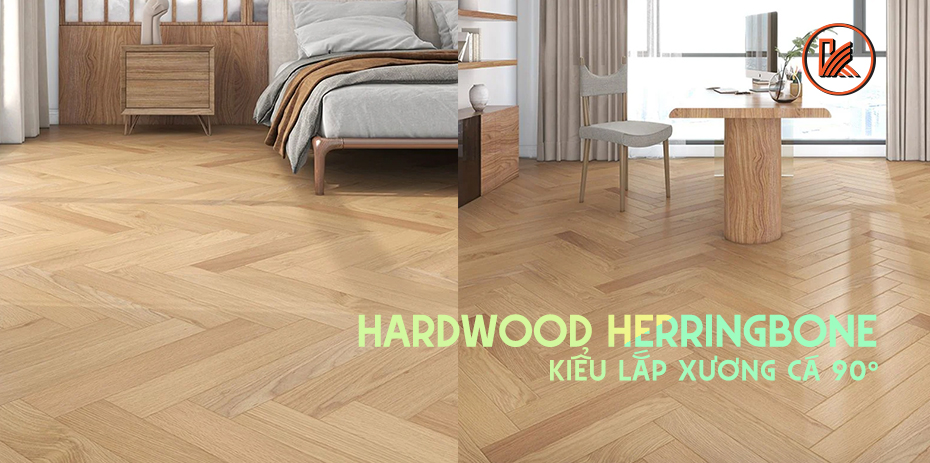
- Common types of engineered natural wood floors such as: Cam Xe, Chiu Liu, Teak, Herringbone Oak, Walnut
- Common types of composite natural wood floors such as: Chiu Liu, Cam Xe, Giang Huong, Oak, Walnut, Teak
1. Natural Wood Floor Production Process
The natural wood floor production process requires high technology and meticulousness to maximize the natural characteristics of the wood, including:
- Step 1: Timber exploitation - Wood is harvested from perennial natural trees, selected from woods with durability and beautiful colors such as cedar wood, ironwood, oak, teak, etc. Wood sources are strictly managed to ensure no harm to the environment.
- Step 2: Cut wood – Solid wood is sawn into panels of appropriate thickness. Depending on the type of floor, the thickness of the wood can be from 10mm to 20mm, helping to ensure load-bearing capacity and long-term structural stability.
- Step 3: Drying the wood – This is a very important step that helps remove moisture inside the wood, minimizing shrinkage and expansion when used. Wood is usually dried at a temperature of 50-60 degrees Celsius for 7-14 days to reach a standard moisture content of less than 12%.
- Step 4: Processing – The dried wooden panels will be surface processed, ground smooth and covered with a layer of protective paint, to increase scratch and termite resistance.
- Step 5: Check quality and finishing – Before being put into use, each wooden panel is thoroughly checked for dimensional accuracy, hardness and environmental resistance.
2. Classification of Natural Wood Floors According to Hardness
The hardness of natural wood is an important factor affecting durability and scratch resistance. Below are the hardness levels and typical wood types:
- High hardwood group: Wood in this group has very high hardness and durability, suitable for areas with high traffic density.
- Stone wood: Has very high hardness, natural reddish brown color, little shrinkage and good termite resistance.
- Ironwood: Extremely high hardness, often dark in color, durable over time and less deformed.
- Chiu Liu wood: With dark color, high hardness, suitable for classic and luxurious spaces.
- Medium hardwood group: This type of wood is easy to process, has good durability and bearing capacity.
- Oak wood: Medium hardness, beautiful and bright wood grain, easy to process and maintain.
- Teak wood: High termite resistance, good water resistance, suitable for coastal spaces.
- Red oak: Average hardness, beautiful color and grain, often used in luxury projects.
- Soft wood group: This wood group has lower hardness, is easy to process but requires careful maintenance.
- Pine: Wood grain is bright and beautiful, easily affected by impact and requires regular maintenance.
- Peach wood: Easy to process, reasonable price, average hardness.
3. Benefits of Using Natural Wood Floors
- Increase the value of the house: Natural wooden floors help the space become luxurious and increase the value of real estate.
- Outstanding durability: With good bearing capacity, natural wood floors are durable and beautiful over time.
- Safe for health: Contains no toxic chemicals, creating a healthy living environment for the family.
- Good heat and sound insulation: Natural wood helps insulate, keeping the house cool in the summer and warm in the winter.
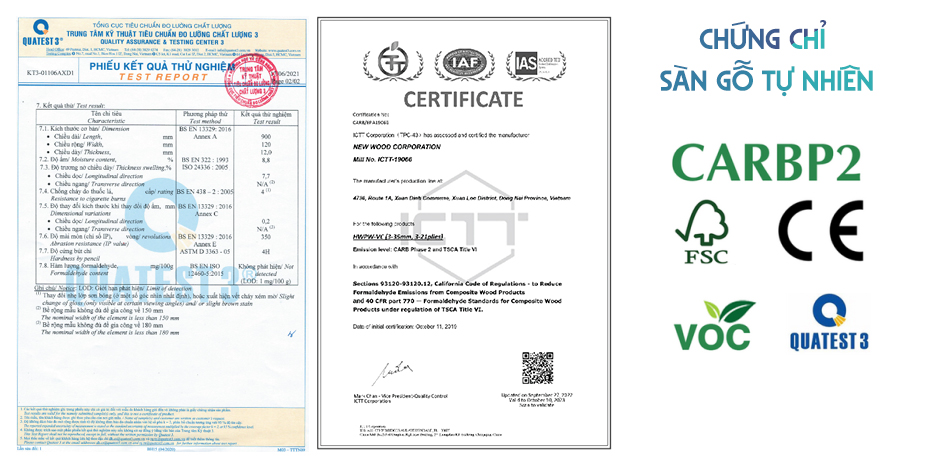
Natural wood flooring has product quality certifications such as: QA SURFACE TEST REPORT (Certificate of hardness - abrasion resistance), CARBP2, TSCA, VOC, QUATEST3, FSC, CE
Natural wood flooring has many advantages, due to the use of natural wood materials, the product has a very natural beauty, has a uniform structure, is sturdy and can be crafted in many designs. In addition, wood material is suitable for areas near the sea and rivers - it limits corrosion, does not oxidize, natural wood is long-lasting wood that does not deteriorate in wet environments and is very durable in dry environments.
Natural wood has living cells that provide nutrients to nourish the tree. Thanks to those cells, natural wood floors have the function of absorbing toxic gases released by other objects or exhaled by ourselves, affecting human health, especially in closed spaces such as bedrooms, living rooms, etc.
Disadvantages of natural wood floors
Due to the physical properties of the raw material, natural wood has physical and mechanical changes when the weather changes such as: warping, expansion, discoloration, mold, etc. In the past, we often saw wooden doors and wooden walls warping when the weather changed, like when it rained, and when it was hot, they shrank, forming gaps.
Today in the wood processing industry, wooden flooring manufacturing companies have applied advanced techniques from Italy and Japan and combined with modern machinery lines, the company's products have eliminated all the disadvantages of natural wood such as warping, mold, termites, etc. Without changing the original properties of natural wood.
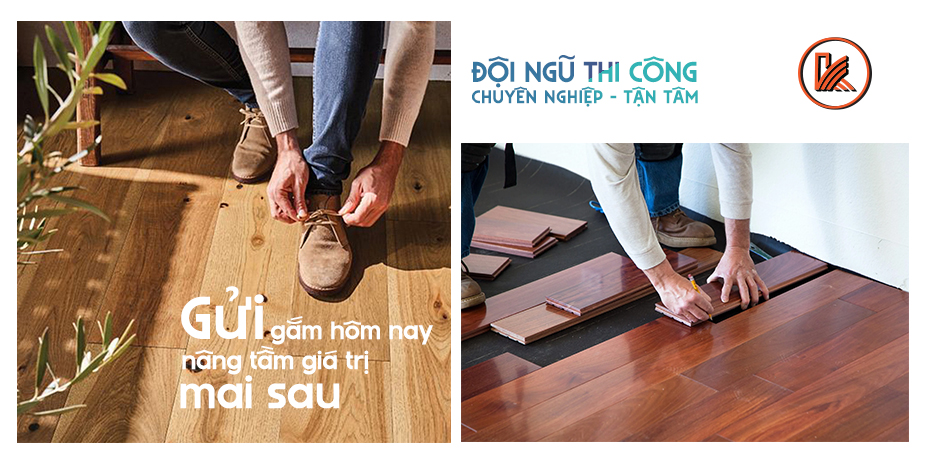
Wood Floor Warehouse – Trusted Address for Natural Wood Floor Products
Wood Flooring Warehouse provides a variety of high quality natural wood flooring products, from high hardwoods to softwoods, to suit the needs and style of each customer. Here, you can find products that are strictly quality tested, ensuring durability and safety for users. Please contact Wood Floor Warehouse now to receive detailed advice and choose the most suitable natural wood flooring product for your space.
Natural wood floors provide a high-class living space with high durability, safety and environmental friendliness. For more information and to find quality natural wood flooring products, come to Wood Floor Warehouse.
When choosing natural wood flooring from a supplier, it is necessary to ensure the following standards to ensure the quality and durability of the product:
1. Wood quality:
- Type of wood: Choose high-quality natural wood such as Teak, Redwood, Oak, or Oak with good durability and termite resistance.
- Wood humidity: Standard humidity (about 8-12%) to avoid shrinkage and warping after installation.
2. Wood treatment process:
- Wood must be thoroughly dried to prevent termites and increase stability
- The wooden surface is treated smooth, evenly colored, and covered with a durable protective paint layer.
3. Size and thickness:
- Standard thickness is 15mm or more to ensure bearing capacity and durability.
- Uniform size, ensuring easy installation and pairing.
4. Quality certification:
- Reputable suppliers must have certificates of legal wood origin, meeting international standards such as FSC (Forest Stewardship Council).
5. Warranty and after-sales service:
- Clear warranty policy, usually 5-10 years for natural wood floors.
- Support maintenance, repair, and maintenance when necessary.
6. Supplier experience and reputation:
- Choose a long-term supplier with a good reputation in the market.
- Highly appreciated by customers for product and service quality.
7. Consulting and construction services:
- There is a team of professional consultants to assist customers in choosing the type of wood that suits their needs.
- Providing professional construction services to ensure the aesthetics and durability of the floor.
- Ensuring the above standards will help you choose natural wood floors that are not only beautiful but also durable and worth the long term.
FREE SERVICE
- Survey, floor measurement, estimate - quote.
- Consultation to view samples at home 24/7 (from 7am to 9pm Monday to Sunday)
- Provide samples to check product quality, only from C.O & C.Q
Switchboard: 1800 6121 Holine: 0913 8888 01 | 0913 8888 02 (Zalo)